

In mountaineering, decisions don’t just shape the route; they shape lives.
Every climber, whether it’s their first trip up Mt. Rainier or their six hundredth faces moments where instinct, knowledge, and heart collide. Sometimes those choices lead to the summit. Other times, they lead us back to the trailhead. And the consequence of misreading the situation, however small that mistake, can result in the mountain exerting its will.
That truth sits at the core of this craft. Mountaineering is as much a mental game as it is a physical one. Sure, we train our legs to carry us uphill, but it’s our decisions that give us the opportunity to return home safely.
“You Want to Live So You Can Enjoy the Mountains Another Day”
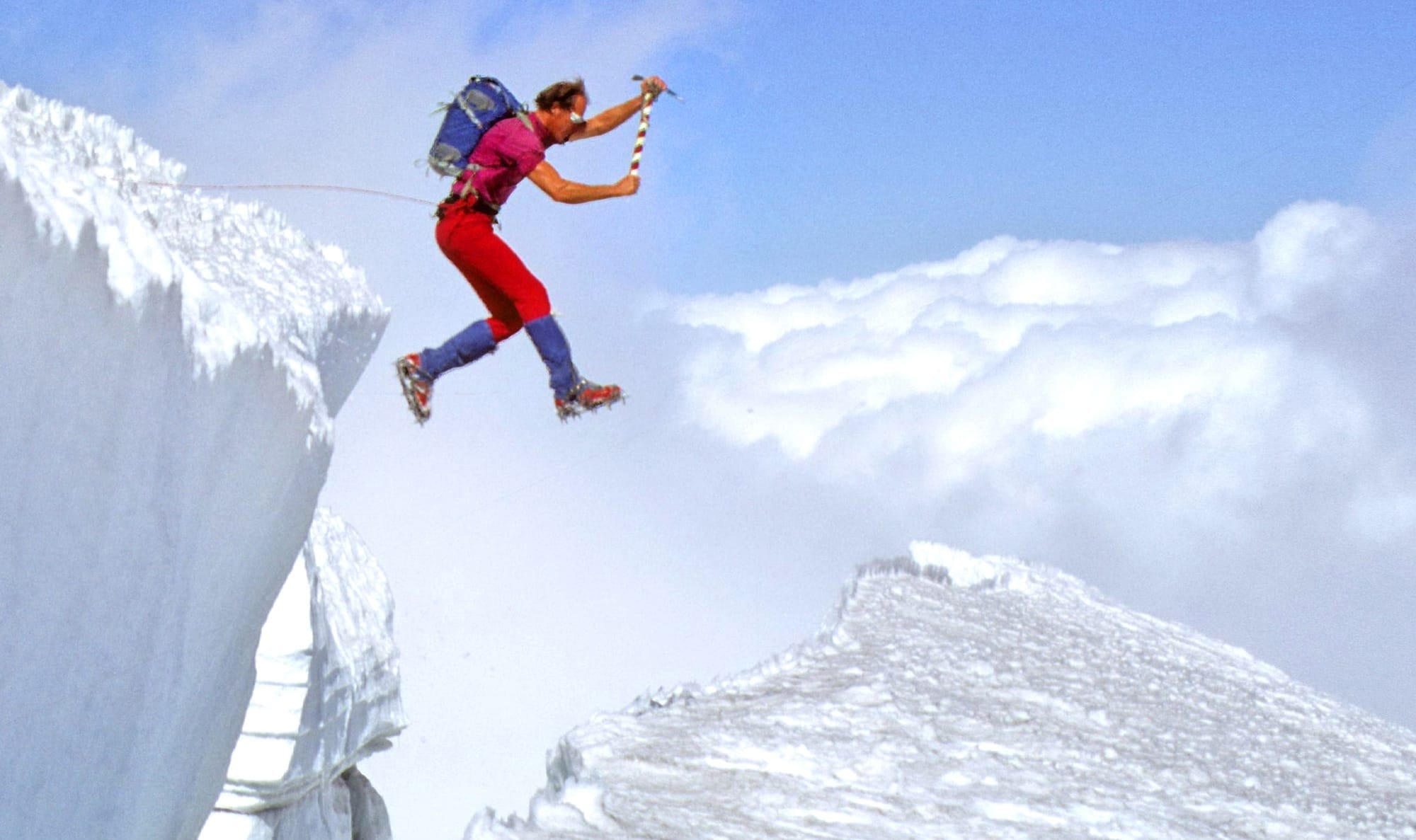
Lou Whittaker, RMI’s founder and one of America’s pioneering mountain guides, never romanticized risk. Reflecting on a tragedy on Mt. Rainier in 1981, he wrote:
“What really ticks me off is people who say, after accidents like this, ‘at least he or she died doing something they loved.’ No way! You don’t want to die in the mountains. You want to live so you can enjoy the mountains another day.”
That sentiment can be uncomfortable, but it’s honest. In the climbing world, we sometimes soften loss with poetic language. Yet behind every tragedy is a person who wanted to live, teammates who fought to save them, and families forever changed.
When Experience Isn’t Enough
Even the most seasoned climbers make decisions that, in hindsight, could have gone differently. But hindsight isn’t a fair judge of what it means to move through complex terrain, under stress, in shifting conditions. The hard truth is that sometimes tragedy happens despite our best judgment.
In many incidents, we can trace the beginning back to one small decision that drifted just slightly off course. Even the best decisions can be tested by the mountains, as RMI Guide Pete Van Deventer explains: “After a few bad days of weather at Camp Muir on a longer Rainier program, the weather broke, and we had a forecasted hole of good weather to climb. As we stood on top, blue skies went to zero visibility almost instantly as the next system hit earlier and with more power than any forecast had called for. On the way down, we felt the pressure to get lower as quickly as possible and allowed our teams to get separated by just a minute. That short window was the start of a long recovery for me, resulting in severe frostbite on both hands.”
Stories like Van Deventer’s are reminders that even strong decisions can be overwhelmed by unexpected conditions and highlight the importance of recognizing the unique responsibilities guides carry. Hindsight often tries to simplify these moments into clean narratives, but anyone who has moved through steep terrain in rapidly changing weather knows that real decision-making is rarely that tidy.
Decision-making in the mountains is not about eliminating risk. It is about managing it with honesty, intelligence, and compassion for yourself and your team. Even with deep experience, humility remains one of the most important skills a climber can carry.
The Myth of the Perfect Decision
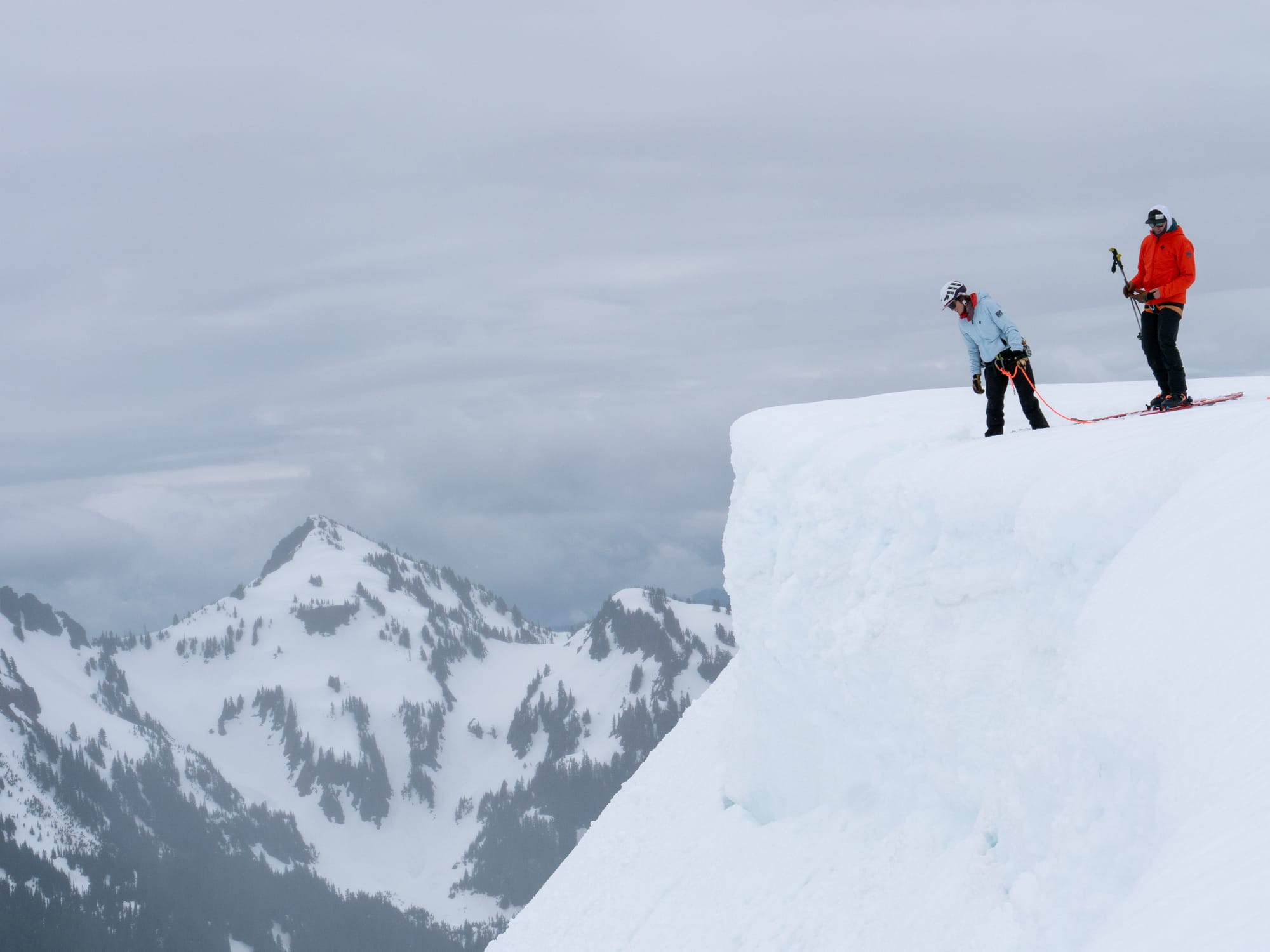
The alpine is a wicked learning environment where the data is messy, the rules are inconsistent, and the feedback is often unreliable, delayed, or misleading. Adding to that, RMI Guide Seth Burns reminded us that “greater uncertainty requires greater margin. As uncertainty increases, one should increase their margin with regard to the understood risks.”
It is tempting to believe there is always a “correct” choice if we just gather enough experience, but the mountains do not work that way. The reality is more nuanced. Mountains are dynamic. Weather shifts. Snow behaves differently than expected. People tire faster than they planned. The terrain keeps us honest; variables are never fully in our control.
Good decision-making isn’t about perfection; it’s about adaptability — evaluating and reevaluating, checking ego at the door, and staying honest with yourself and your partners. If that sounds like it could apply to more than just mountaineering, you’re absolutely right. Turns out the same mindset that keeps you safe on a glacier also works wonders when your car breaks down.
After talking about how unpredictable the mountains can be, Van Deventer reflected on what that means for guides making decisions in the field. “As guides, we are often thought of as examples, imparting a mindset on our climbers, especially during attempts with challenging conditions. There are times we lead climbs in weather that we would never depart in as individual climbers. Some of that is to deliver on as much of the experience as we can for climbers who have put so much into coming.”
“We also know that we have resources - a hut, propane and water, emergency supplies, and the combined experience of navigating that terrain - to stay within our margin of risk. But those are significantly more resources than most independent teams have, or we would have if we were climbing on our own, and we have to recognize that discrepancy. In reality, there are days that we start a climb, that if we were on our own, we would roll over and go back to sleep, or change plans and head to a coffee shop.”
When we learn about risk, we’re not learning to avoid danger. We’re building the judgment to recognize when it is time to pivot, pause, or call it. That’s the true mark of a mountain professional.
Respecting Those Who Came Before Us
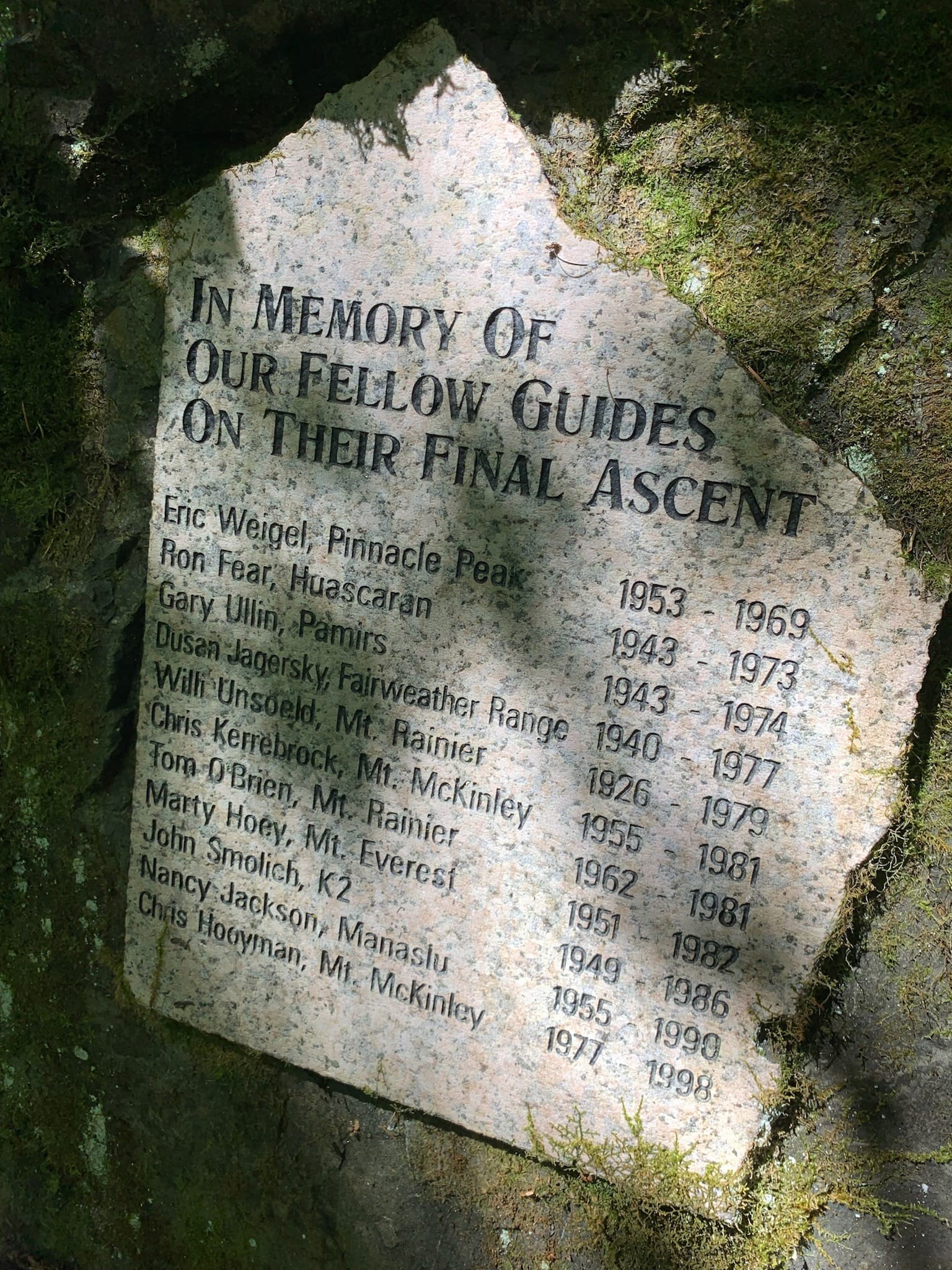
Every generation of climbers learns from the ones before. The decisions, mistakes, and experiences of those who came before us shape the way we approach risk today. That includes friends, colleagues, and guides who have lost their lives in the mountains, not because they sought danger, but because they accepted the fragility that comes with living fully.
Close calls are inevitable, and they quietly shape how climbers move, plan, and trust their judgment on future climbs. One of the keys is to treat close calls as accidents that did not happen, rather than moments we simply got away with. In the guiding world, we call these near misses, and they can teach us as much, or more, than a full accident if we are willing to pay attention. Burns put it simply: “I have learned to reframe how I think about near misses that I am involved in. While often frustrated at myself for the decisions that led up to a near miss, I am also grateful for the invaluable learning opportunity.”
It is sobering. There is a clarity in those moments when we realize how easily things could have shifted and how thin the margin can be. Yet that clarity is also a gift. We honor the people who came before us not by avoiding the mountains, but by climbing smarter, asking better questions, staying curious, and carrying their lessons with respect.
Who Gets The Final Say
Up high, decisions aren’t made by the loudest voice but by the most honest one. At altitude, your focus narrows, the air is thin, and the smallest details, like a shift in the wind or the crunch of snow under your boots, suddenly matter a lot.
It’s part art, part science. You can’t rely on instinct alone, but you also can’t make every call by the book. That’s why the best guides balance both, using hard-earned judgment to keep teams safe and motivated.
A great climb isn’t measured solely by the summit — which wisdom will remind you will still be there tomorrow — it’s measured by returning safely with knowledge gained. The mountains don’t bend to our plans; we adapt to theirs, and the best climbers learn to listen. Listening to the weather, the snow, your gut, and your teammates. Not out of fear, but respect. Sometimes it means pushing on. Sometimes it means turning back. Either way, it’s an act of courage.
It’s that philosophy that should underpin every choice on the mountain because courage in mountaineering isn’t about defying nature. It’s partnering with it.
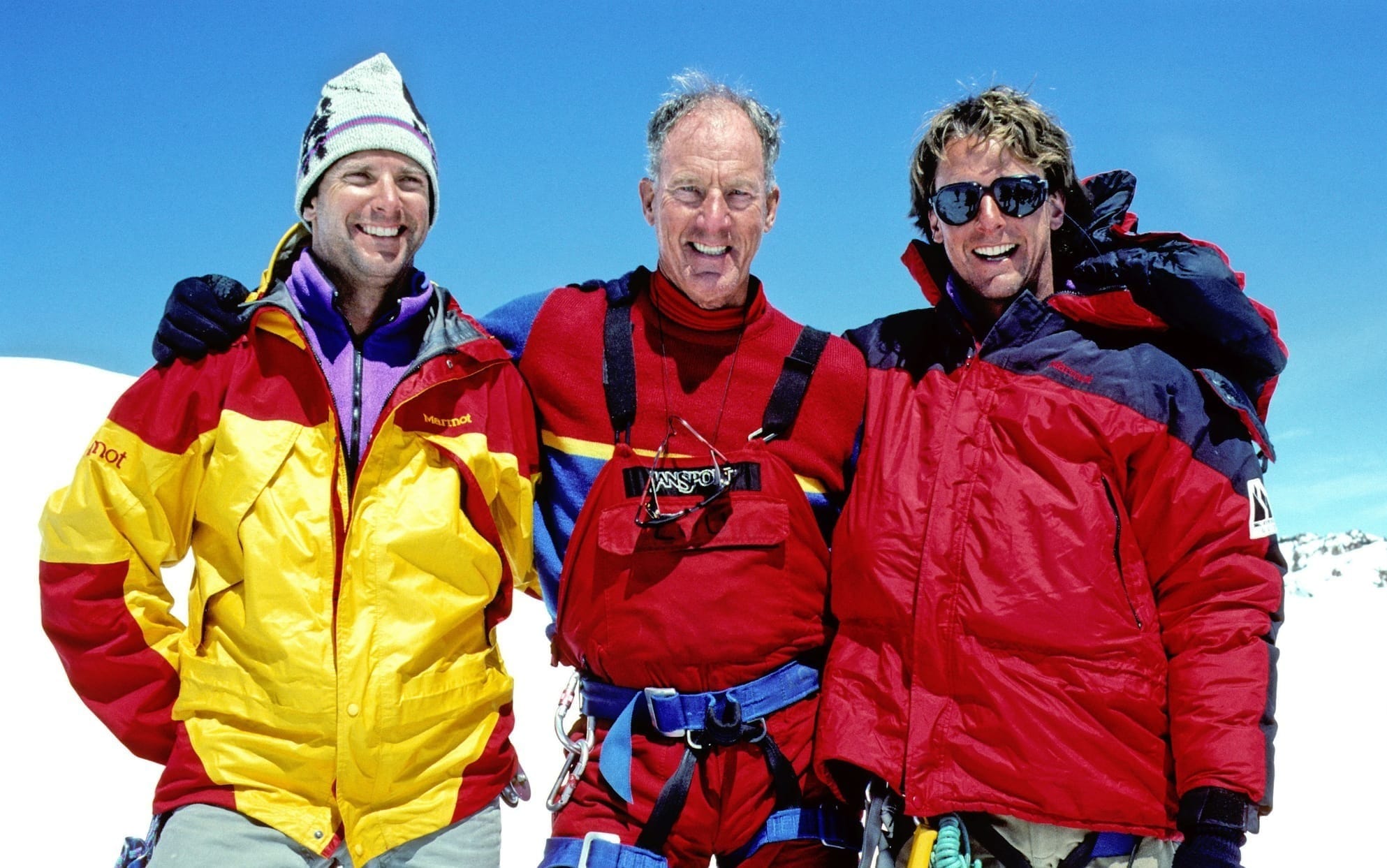
When we choose wisely, we give ourselves the best chance to do what Lou Whittaker always wanted for his climbers: to live long enough to enjoy the mountains another day.
Sources
- Lou Whittaker, Memoirs of a Mountain Guide, 1995
- American Alpine Institute, Decision Making in the Mountains: Managing Risk and Reward, 2023
- The Mountaineers, Mountain Safety and Leadership, 2022