


If you ask ten climbers when the “best” time to climb Mount Rainier is, you’ll get ten confident answers, and at least half of them will contradict each other.
That’s because the question itself is incomplete.
There is a peak season on Rainier. There are also early and late windows that many climbers overlook or misunderstand. What often gets lost in the conversation is this: the best time to climb Rainier depends less on the calendar and more on what you want out of the climb.
For an in-depth Webinar on this topic, check out this presentation by senior RMI guide Dominic Cifelli.
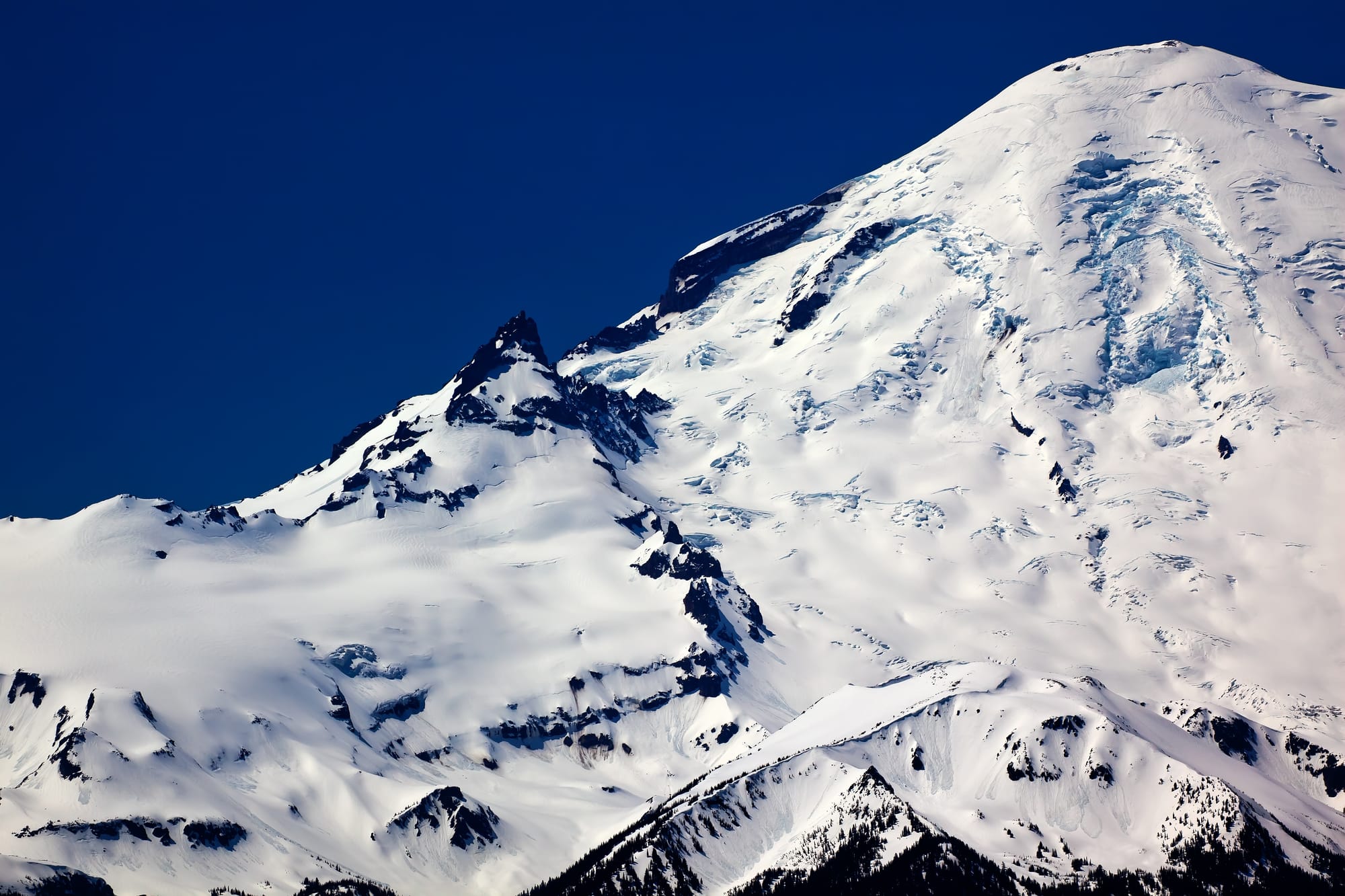
Rainier is not a static mountain. It evolves continuously from spring through late summer, reshaping its glaciers, routes, hazards, and learning opportunities along the way. Each phase offers something distinct; not better or worse, just different.
Below, we’ll walk through how Rainier changes through the season, what experienced guides actually prefer, and how to choose the timing that best aligns with your experience level, learning objectives, and future climbing goals.
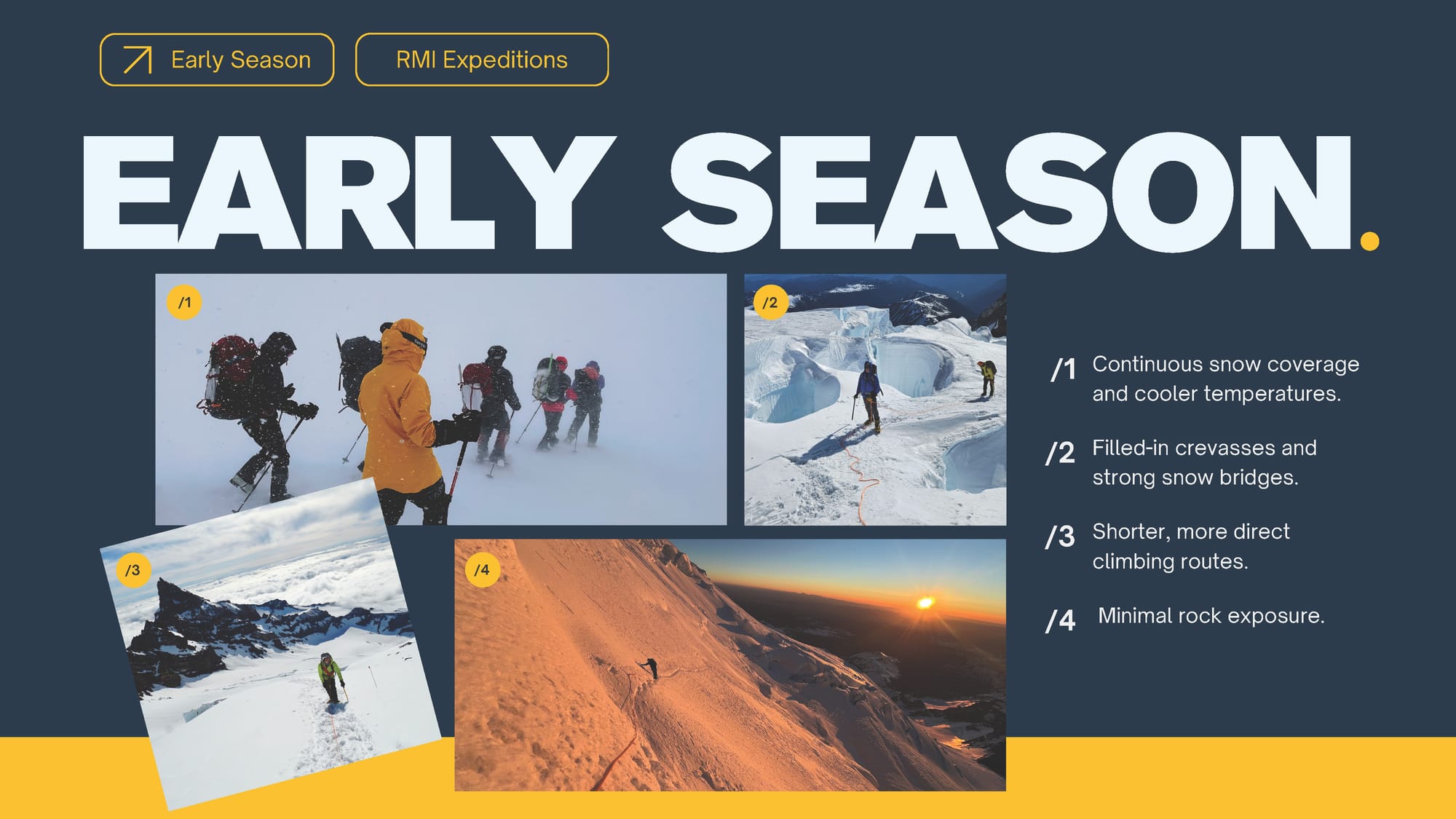
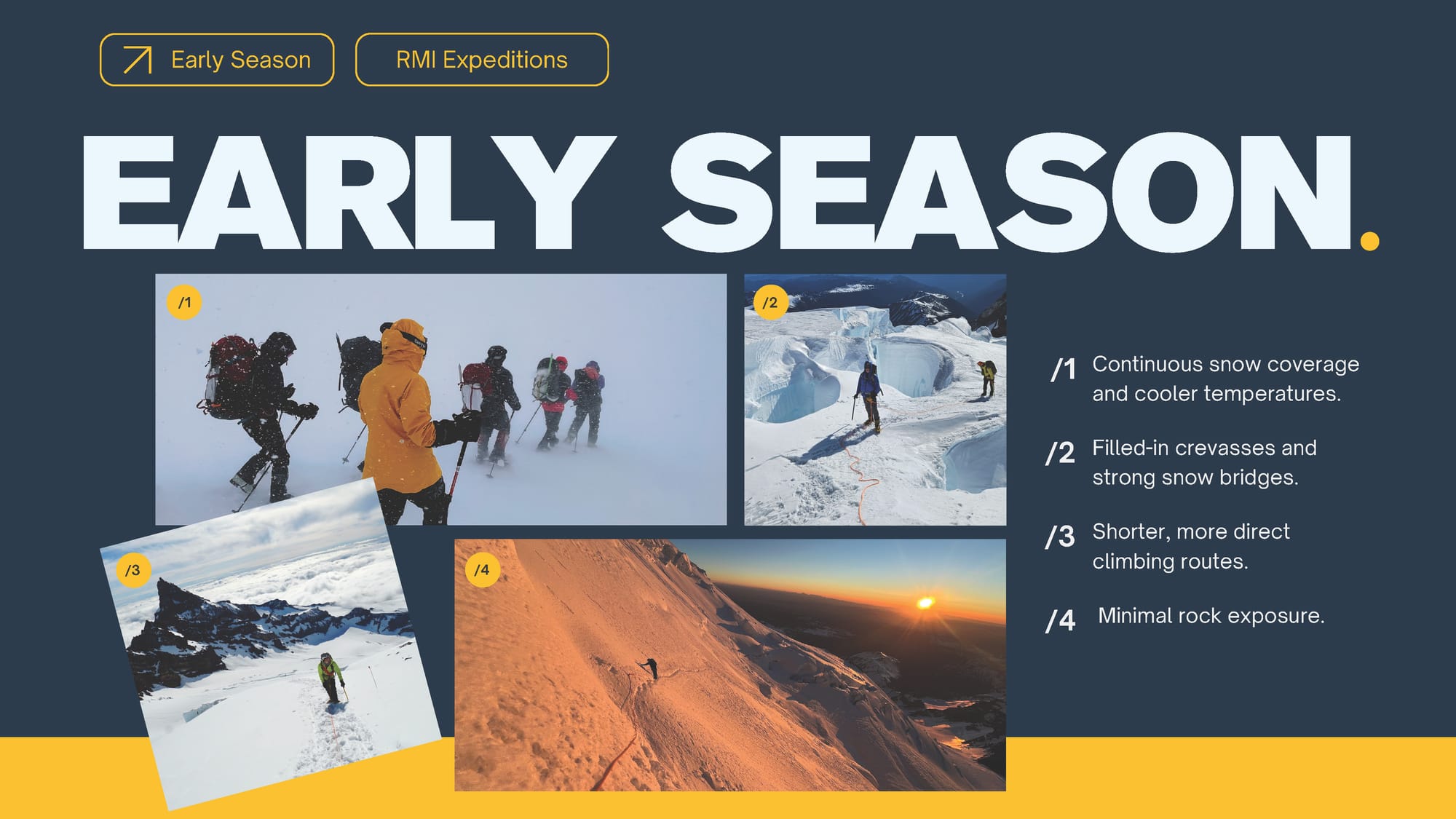
Early-Season Climbing: A Snow-Covered, More Direct Route
For many climbers, early season carries a misconception: that climbing before summer somehow lowers your odds of success. In reality, most of RMI’s most tenured guides consider early season their favorite time on Rainier, and for good reason.
What the Mountain Is Like
In spring and early summer, Rainier is still wearing its winter coat. A deep, continuous snowpack covers glaciers and rock bands alike, creating a cleaner, more unified alpine environment.
Key characteristics:
- Filled-in crevasses with strong snow bridges
- Shorter, more direct routes with fewer detours
- Consistent snow travel from base to summit
- Minimal time on exposed rock
- Cooler temperatures, especially compared to mid-summer heat
The result is a mountain that rewards efficient movement, strong snow technique, and good decision-making, without the constant transitions between snow, rock, and ice that develop later in the season.
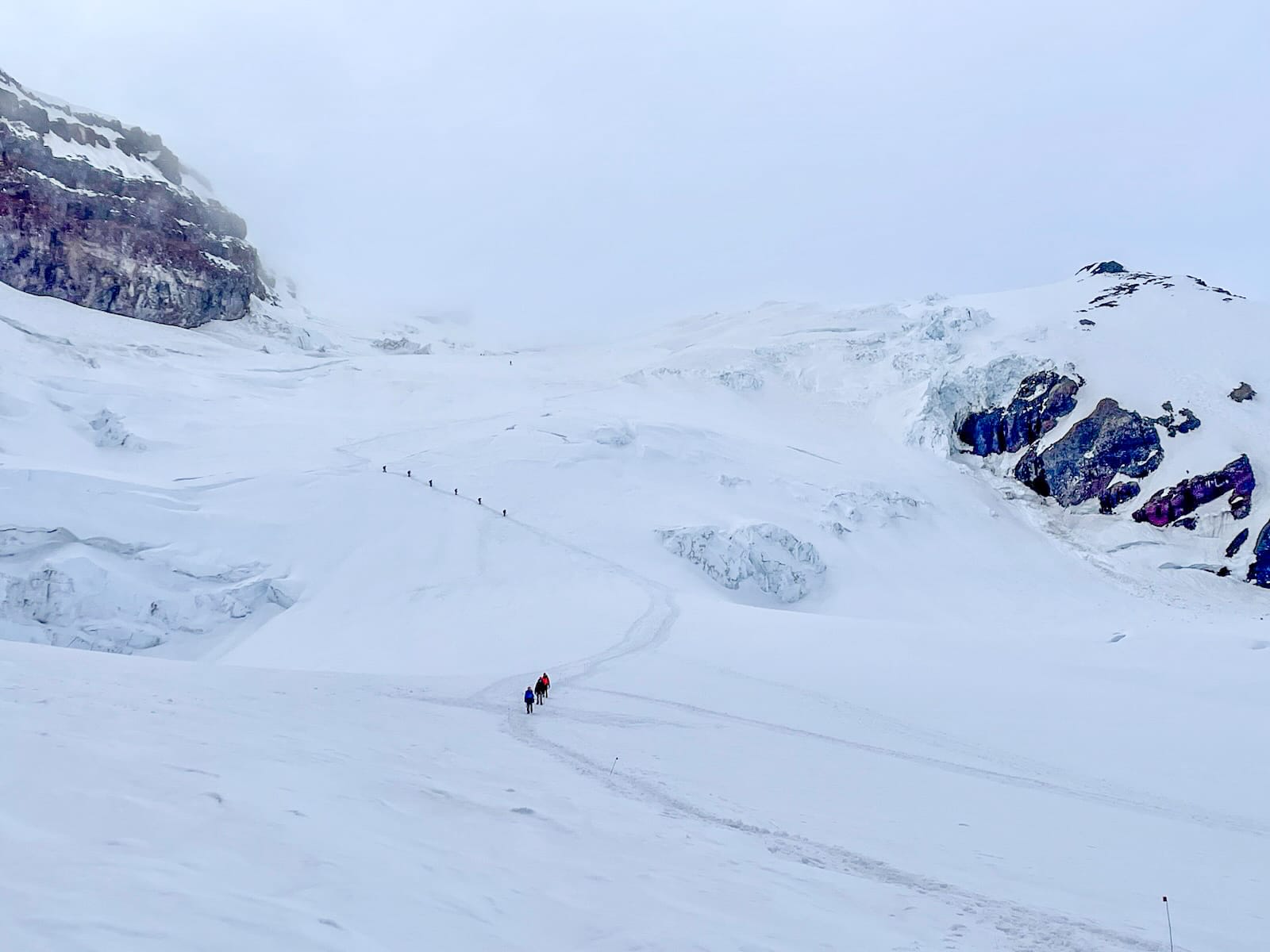
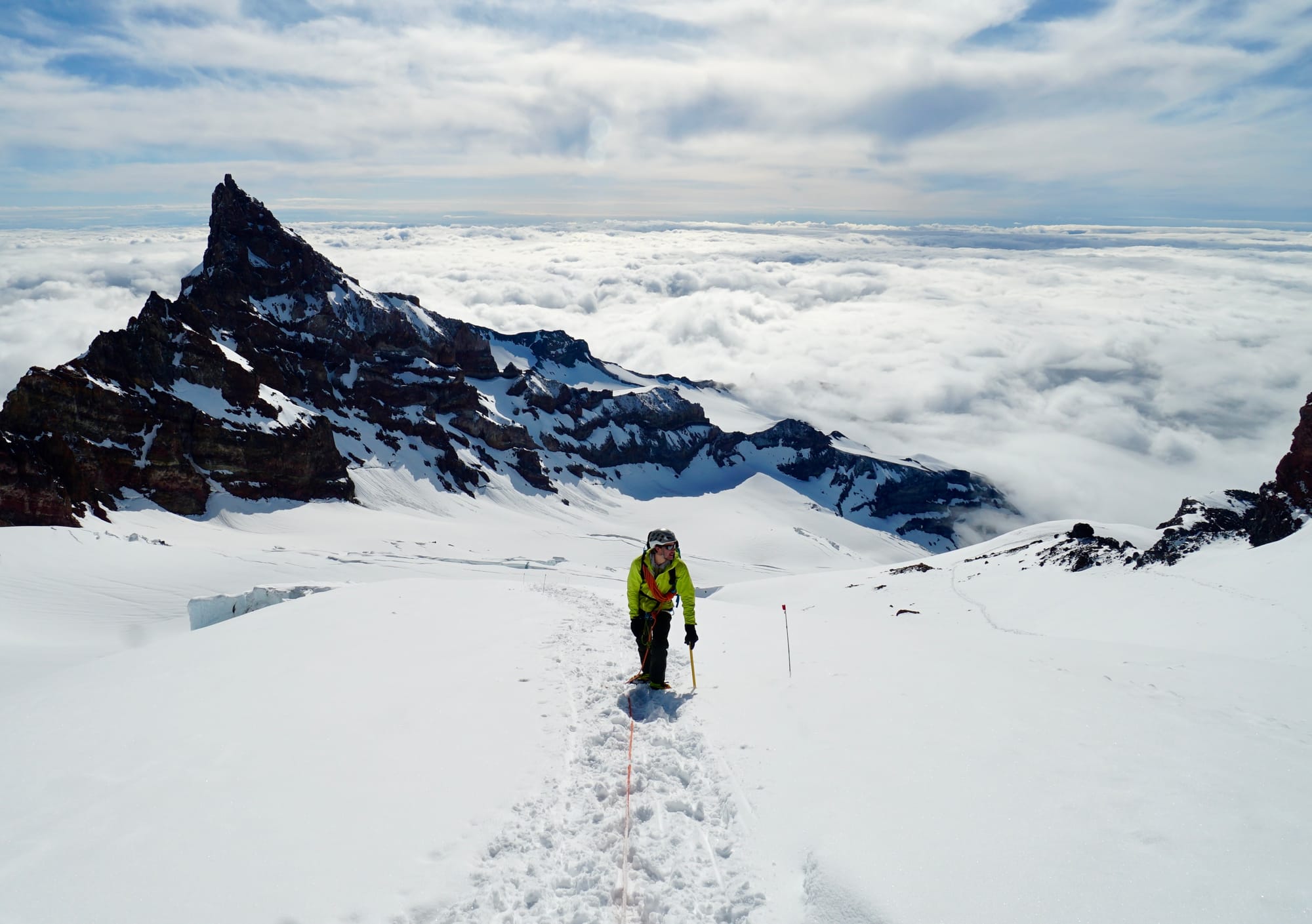
Early season on the Ingraham Direct variation of the DC Route
Why Guides Love It
RMI guides answer questions about early-season climbing constantly, and the answers are remarkably consistent.
Early season offers:
- Fewer climbers on route and less traffic-induced congestion
- Lower overhead rock hazard due to snow coverage
- More aesthetic, “classic alpine” conditions
- Opportunities to kick in fresh routes and adapt to changing terrain
- Excellent terrain for teaching glacier travel, crampon technique, and rope systems
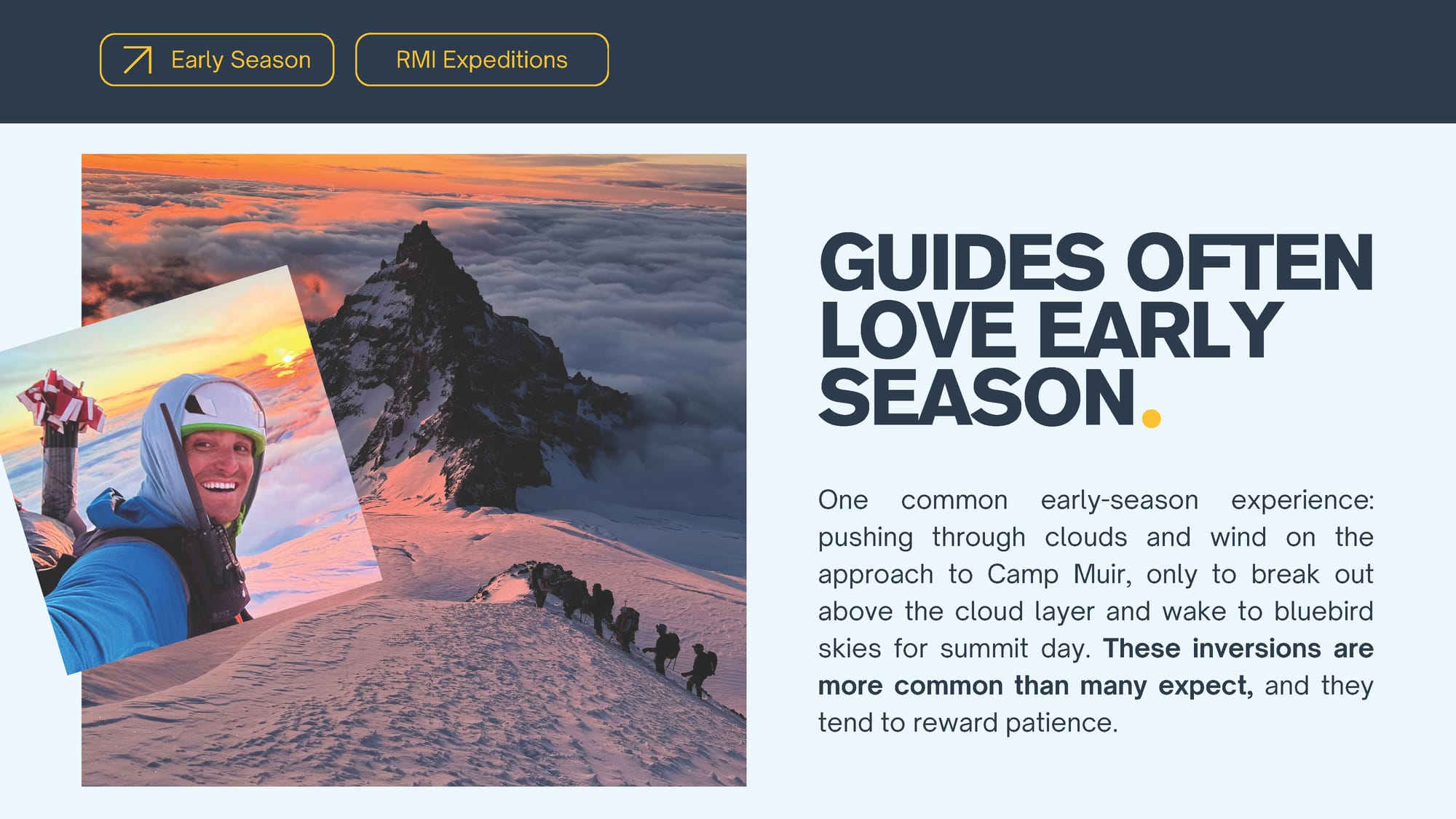
One common early-season experience: pushing through clouds and wind on the approach to Camp Muir, only to break out above the cloud layer and wake to bluebird skies for summit day. These inversions are more common than many expect, and they tend to reward patience.
Who Early Season Is Best For
Early season is especially well-suited to climbers who:
- Prefer snow climbing over mixed terrain
- Value efficiency and flow over technical complexity
- Want fewer crowds and a quieter mountain
- Are training for larger glaciated peaks like Denali
- Enjoy shoulder-season hiking and alpine travel
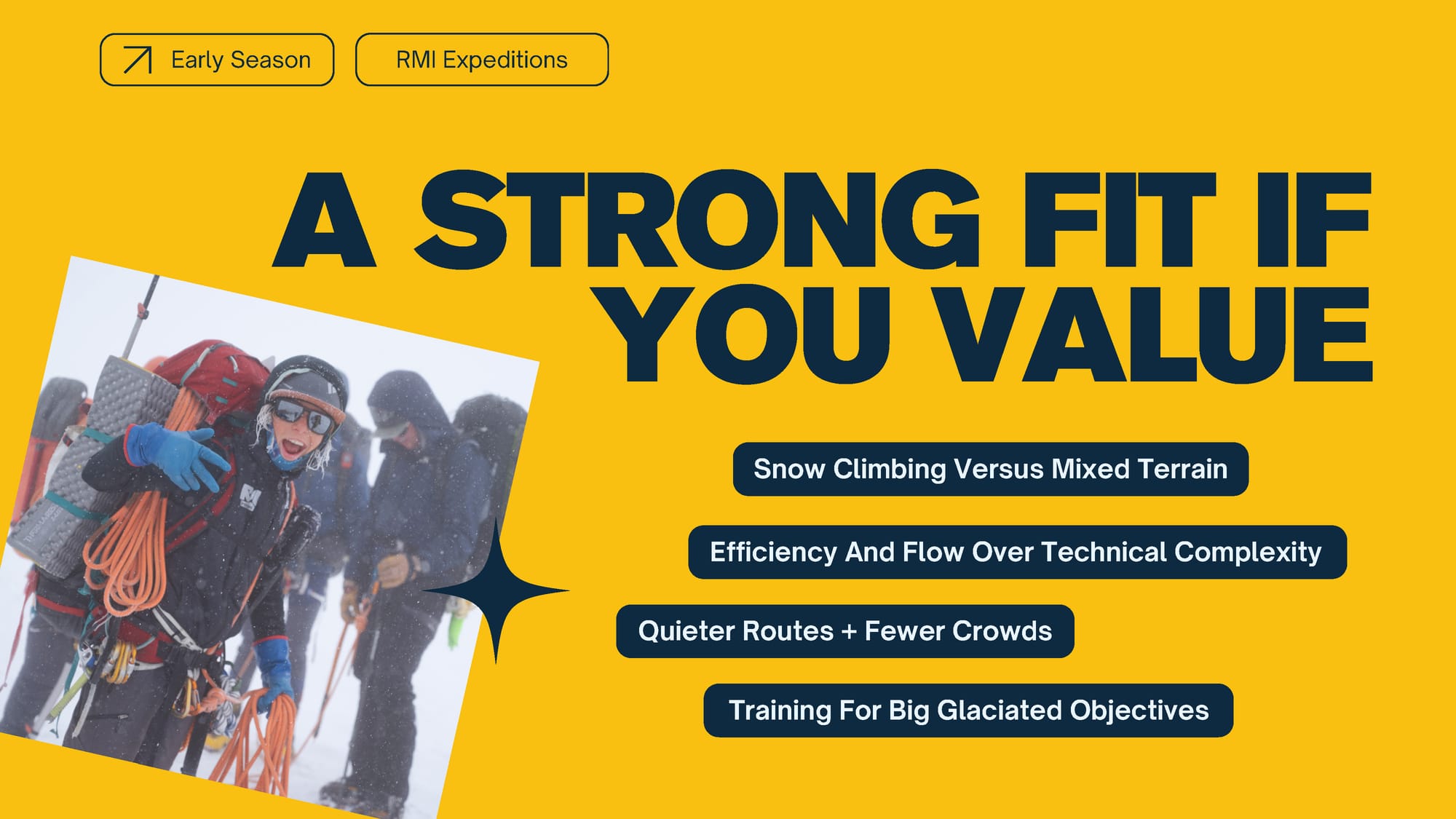
For climbers building toward Alaska or other big glaciated objectives, early-season Rainier provides some of the most relevant training terrain in the lower 48.
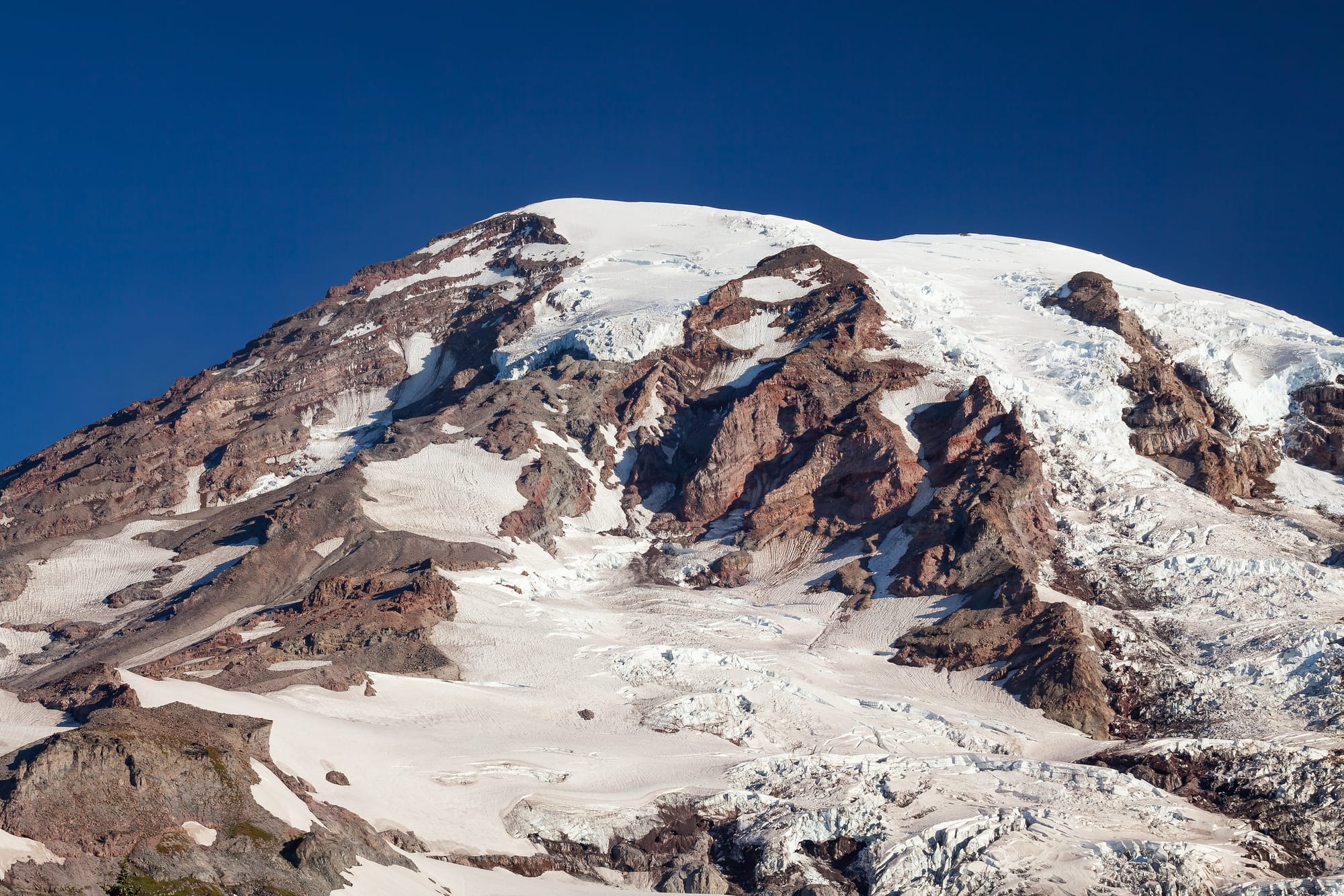
Peak Season: Predictability and Accessibility
Peak season exists for a reason. As the snowpack consolidates and weather patterns stabilize, Rainier often offers its longest stretches of predictable climbing.
What the Mountain Is Like
By mid-summer:
- Routes are well-established and clearly defined
- Crevasses begin to open, requiring engineered solutions
- Ladders and fixed protection become more common
- Weather windows tend to be longer and easier to forecast
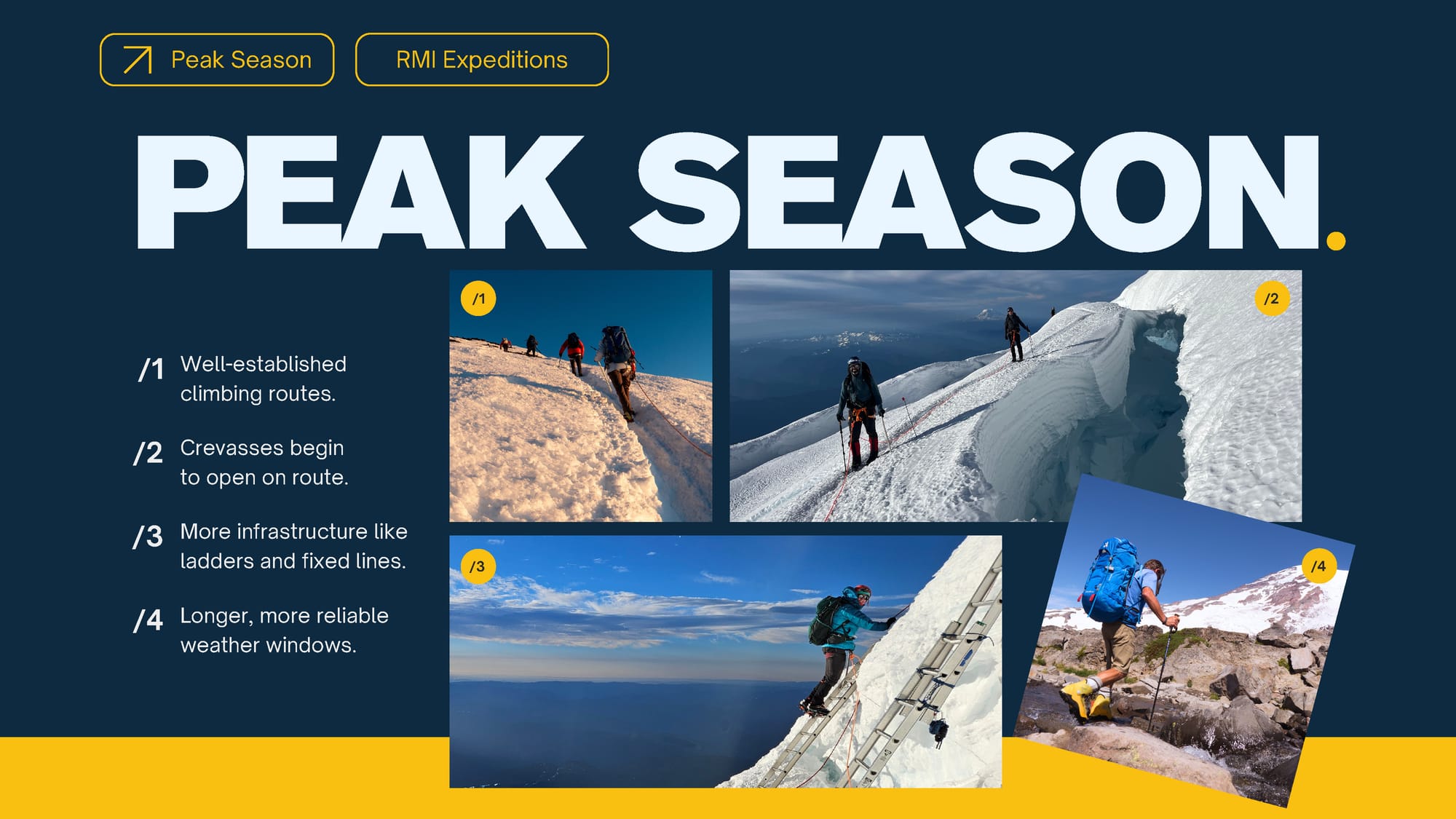
This is the period most climbers picture when they imagine a Rainier ascent, and it’s a great time to be on the mountain.
Tradeoffs to Understand
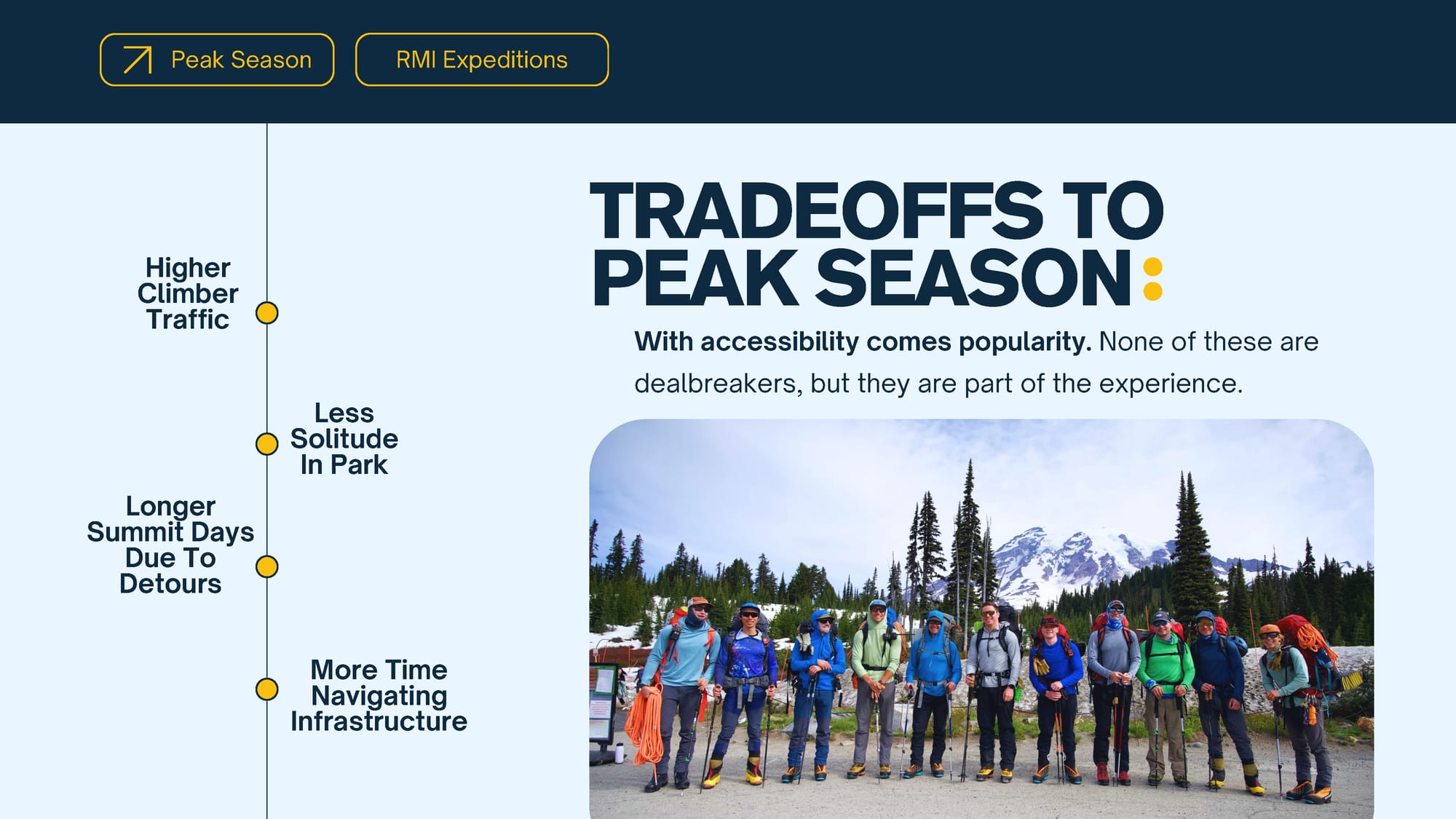
With accessibility comes popularity. Peak season typically brings:
- Increased route traffic
- Longer summit days as routes wind around open crevasses
- More time navigating infrastructure like ladders and fixed lines
None of these are dealbreakers, but they are part of the experience.
Who Peak Season Is Best For
Peak season is a strong fit for climbers who:
- Want the most predictable conditions
- Are newer to alpine climbing
- Prefer established routes and infrastructure
- Have limited scheduling flexibility
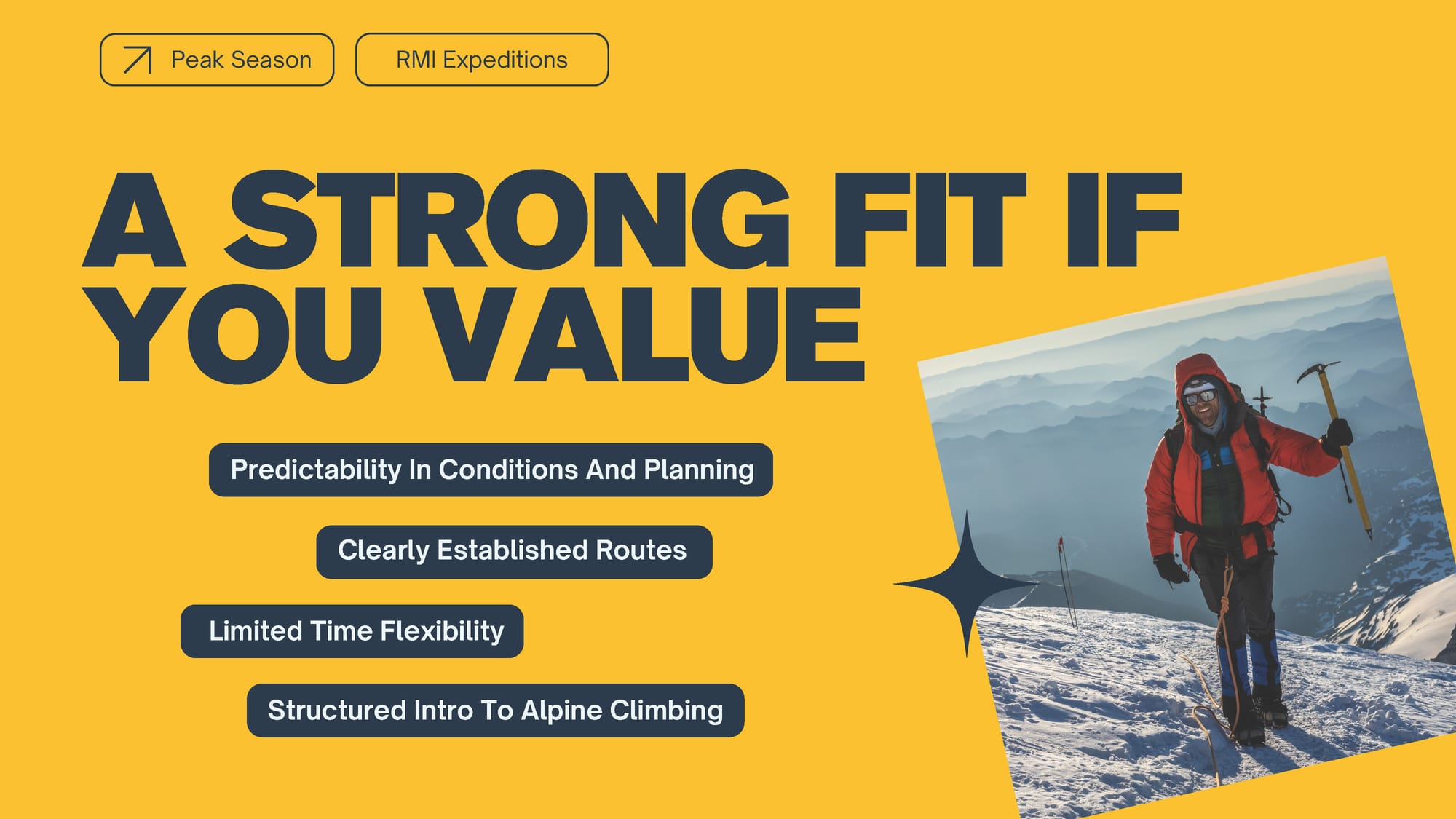
For many first-time Rainier climbers, this window offers an ideal blend of challenge, support, and consistency.
Late-Season Climbing: A Dynamic, Technical Experience
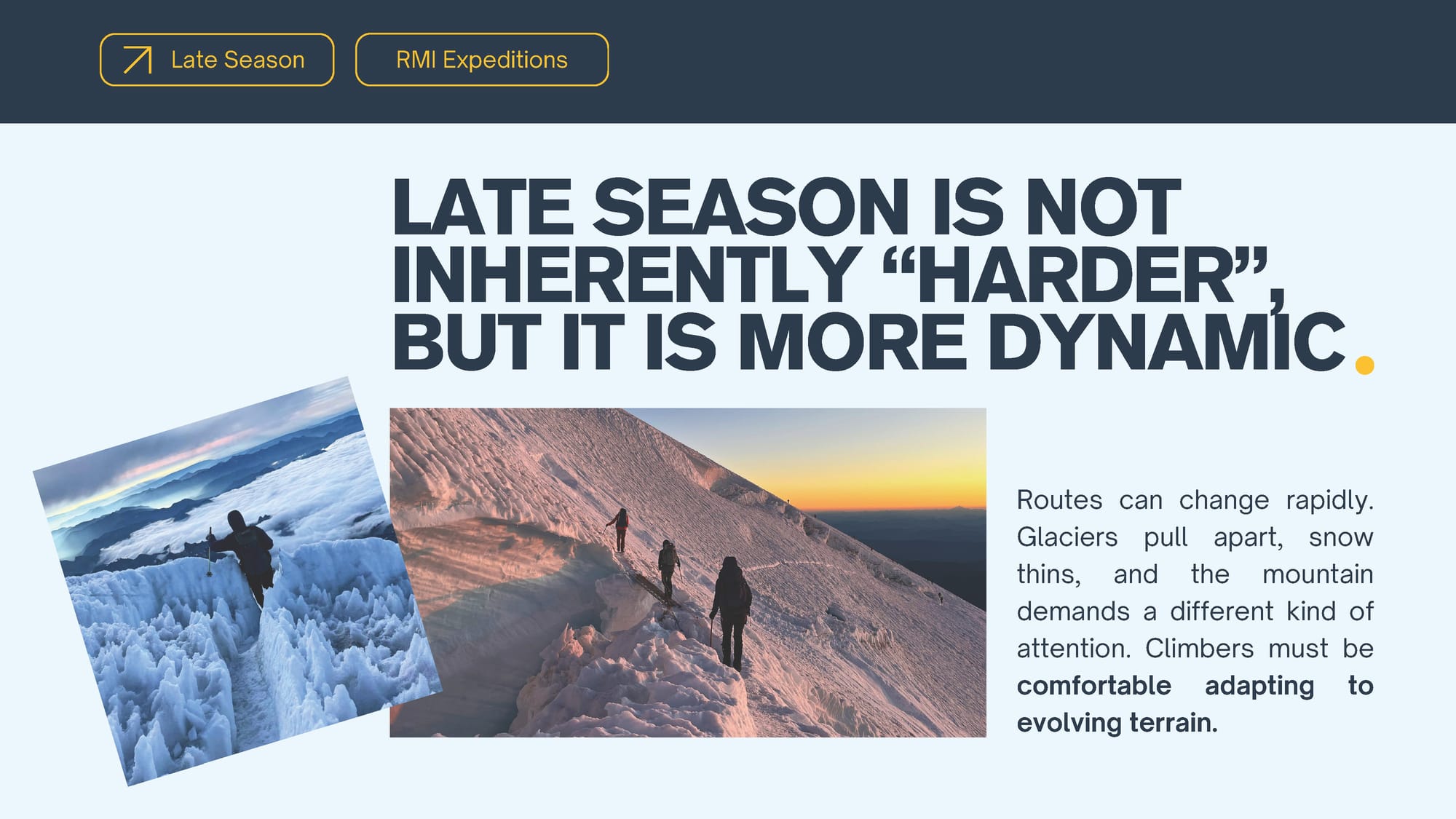
As summer progresses, Rainier becomes more sculpted and dramatic. Glaciers pull apart, snow thins, and the mountain demands a different kind of attention.
What the Mountain Is Like
Late season conditions often include:
- Wider, more complex crevasses
- Increased ladder crossings and route-finding
- Longer summit days (and earlier start times) with more elevation loss and gain
- Firmer snow during early morning travel
- Cooler nights and quieter camps
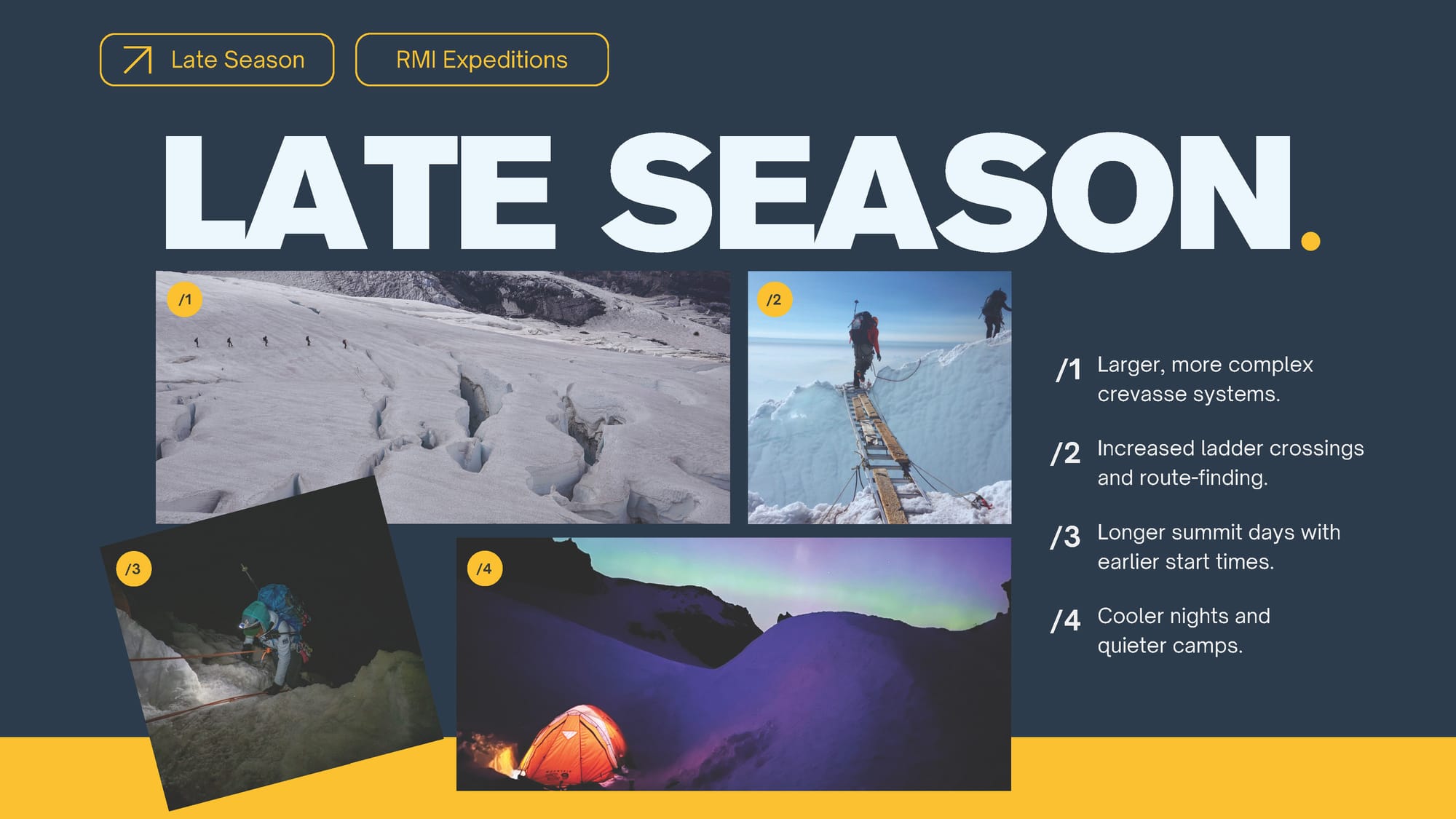
Late season is not inherently “harder”, but it is more dynamic. Routes can change rapidly, and climbers must be comfortable adapting to evolving terrain.
Why Climbers Choose Late Season
Late-season rewards:
- Strong endurance
- Mental resilience
- Willingness to engage with complexity rather than avoid it

It’s also an excellent match for climbers preparing for high-altitude, less glaciated objectives like Aconcagua or other Andean peaks, where long days and variable terrain are the norm.
Weather Dictates Everything - And It’s Always Unpredictable
While seasonal trends provide general guidance, no one can precisely predict the “best” time to climb Rainier each year. Weather patterns can shift dramatically from season to season, completely reshaping climbing conditions.
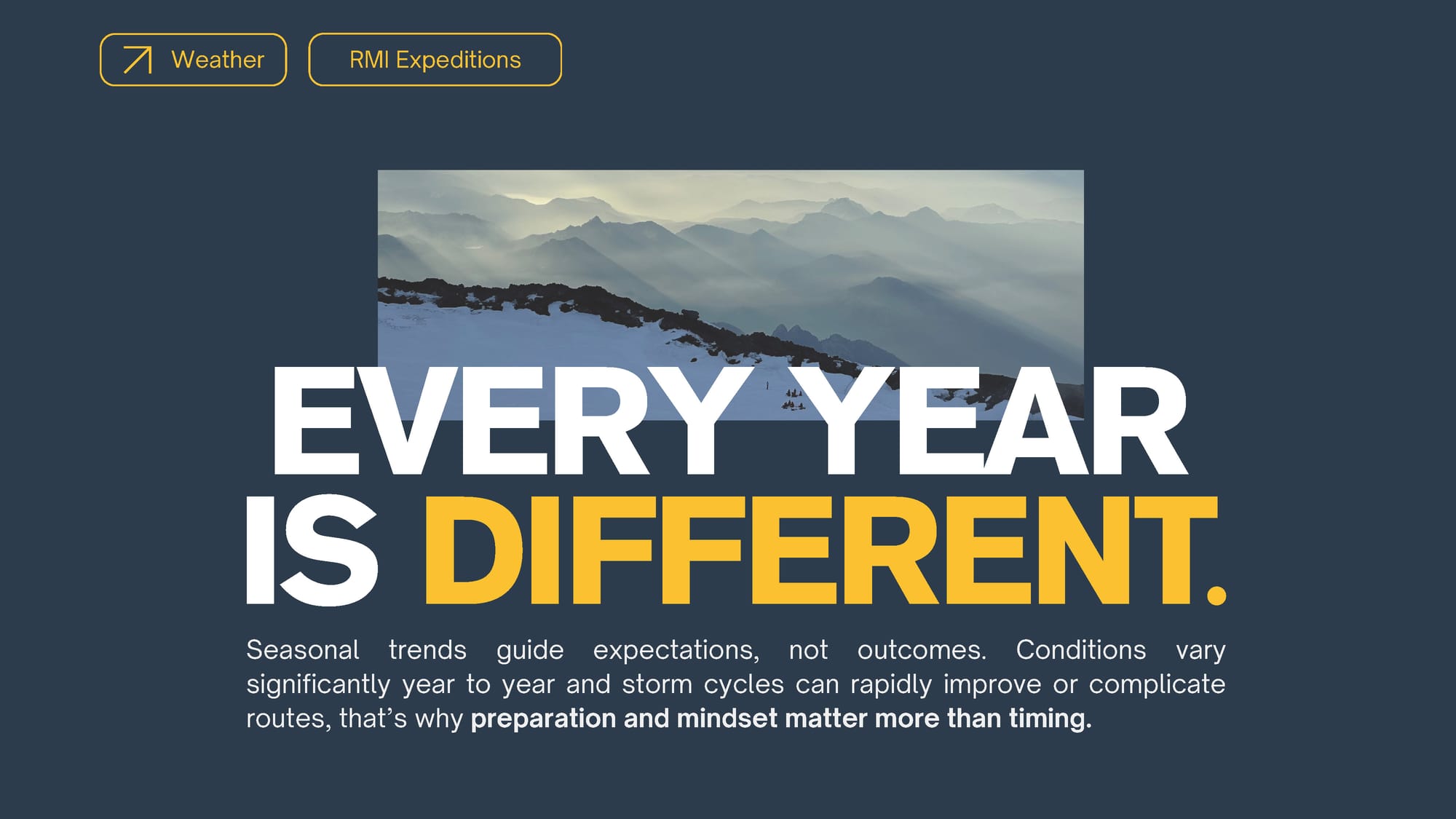
Take 2024, for example; early August saw a series of significant storms that dropped fresh snow on the upper mountain, covering crevasses and smoothing the route. Instead of deteriorating as expected, conditions improved, and excellent climbing continued through the end of the season. Conversely, in other years, warm, dry conditions in mid-July made the route more technical than anticipated.
This variability means there is no “perfect” time to climb Rainier, only the time that works for your schedule and goals. Early- and late-season climbs often get overlooked because of assumptions about difficulty, but in reality, every season has its advantages and unknowns. What matters most is being prepared for a range of conditions and embracing the experience Rainier offers, no matter when you climb.
A Better Question: What Do You Want to Get Out of Your Climb?
Rather than asking when Mount Rainier is “best,” a more useful (and more honest) question is this:
What do you want this climb to give you?
Rainier can be a summit objective, a classroom, a proving ground, or all three. The season you choose shapes how you experience the mountain, not whether the experience is worthwhile.
Some climbers arrive with a singular focus: standing on the summit. Others care just as much about the process, learning how to move efficiently on snow, understanding glacier systems, or spending quiet hours in an alpine environment that feels wild and immersive.
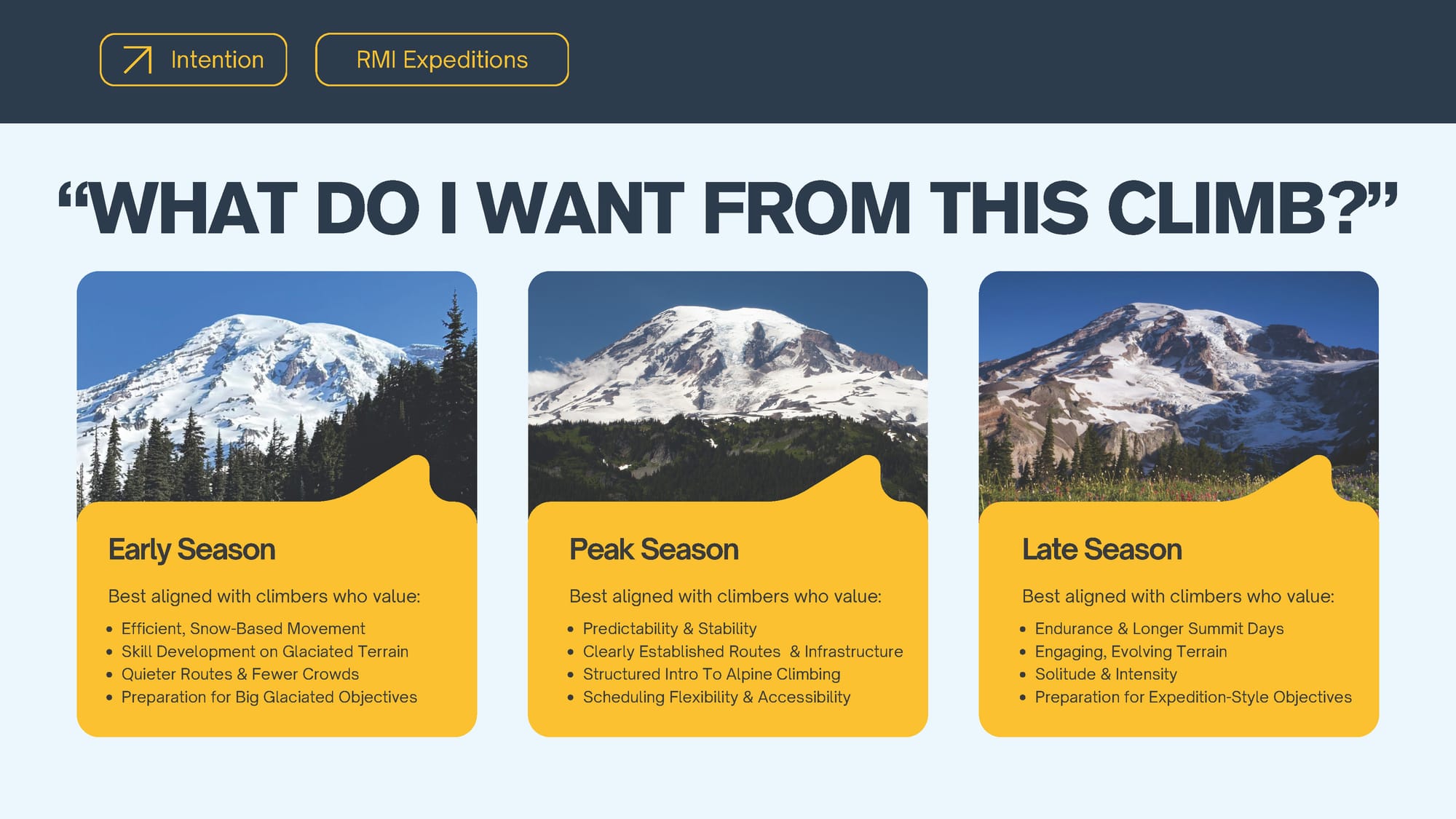
Early season often appeals to climbers who want:
- A fast, efficient, snow-based ascent
- Fewer crowds and a more personal experience on route
- Conditions that emphasize classic alpine movement
- Terrain that closely mirrors big glaciated peaks they may have their eyes on next
Peak season tends to suit climbers who want:
- Predictability and clearly established routes
- A strong balance between instruction and accessibility
- A first Rainier experience with the widest margin for consistency
Late season attracts climbers who value:
- Solitude and intensity
- Long, demanding summit days
- Exposure to evolving glacier terrain
- Conditions that better resemble Andean or expedition-style objectives
None of these approaches is more legitimate than the others. They simply reflect different intentions.
Mount Rainier has a rare ability to meet climbers where they are, and to give them exactly what they’re ready for, if they choose their timing thoughtfully. Whether your goal is a summit, skill-building, future preparation, or simply time spent moving through a powerful alpine landscape, the “right” season is the one that aligns with that purpose.
Climb with intention, and Rainier will deliver, no matter the month on the calendar.


